
Play Indian Spirit Now!
Home → Strategy
Indian Spirit Strategy
Approaching Indian Spirit sensibly
Indian Spirit operates with a theoretical RTP of 95.34%, establishing a house edge of 4.66% over extended play sessions. This mathematical baseline means the casino retains a fixed percentage of all wagers placed on this specific Novomatic title. Players must accept that short-term variance will always deviate from this long-run average.
Sizzling Hot Deluxe, also by Novomatic, offers a slightly higher RTP of 95.66%. The difference is merely 0.32 percentage points, but it illustrates how studio-specific math models vary even within the same developer portfolio. Indian Spirit remains distinct in its thematic execution despite these similar statistical profiles.
The game utilizes medium volatility to balance risk and reward across its 20 fixed paylines. This setting ensures that bankroll depletion happens at a moderate pace rather than through rapid busts or extremely rare payouts. Such a structure suits players who prefer sustained engagement over high-variance speculation.
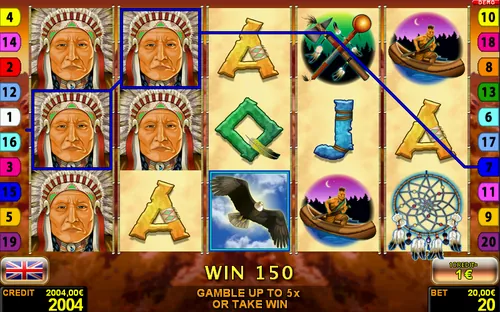
Bankroll rules that hold up
A strict bankroll allocation prevents emotional decision-making during losing streaks on Indian Spirit. Flat betting maintains constant stake levels regardless of previous round outcomes, avoiding the trap of progressive staking systems. Progressive staking only accelerates time to ruin without altering the built-in house edge.
The welcome bonus provides 300% match funds up to €2,000 plus 100 free spins for new accounts. This external capital extends session length but introduces wagering requirements that must be cleared before withdrawal. Bonus money does not change the underlying RTP of 95.34% inherent to the slot mechanics.
Tracking total spend against initial deposit size creates measurable performance boundaries for each visit. Losing more than the allocated unit count signals the end of the session immediately. Discipline in adhering to these limits protects the player from chasing losses on the Dream catcher Wild feature.
Bet sizing against volatility
Medium volatility on Indian Spirit requires bet sizes that can withstand standard deviation fluctuations. A stake too high relative to the bankroll increases the probability of busting before hitting the 10 free spins bonus. Calculating bets as a small fraction of total funds ensures longevity across multiple reels.
Sizzling Hot Deluxe shares medium volatility characteristics with a max win cap of 5000x the stake. While the payout potential differs, the risk management principles regarding bet sizing remain identical for both titles. Higher stakes amplify variance effects regardless of the specific game's symbol distribution.
Flat betting strategies work best when aligned with the game's 20 fixed payline structure. Adjusting stakes after wins or losses disrupts the mathematical expectation set by the 4.66% house edge. Consistent unit sizing allows for accurate tracking of return rates over hundreds of spins.
Session limits worth setting
Time-based limits prevent fatigue-induced errors when playing Indian Spirit's Native American themed interface. Fatigue reduces concentration on scatter positions and bonus triggers like the flying eagle Scatter symbol. Setting a hard stop after two hours maintains analytical clarity during gameplay.
Loss limits define the maximum acceptable reduction in bankroll before terminating the gaming session. Exceeding predefined thresholds often leads to irrational decisions such as increasing stake sizes abruptly. Adhering to these caps preserves capital for future sessions where variance may favor the player.
Win goals provide a clear exit strategy when positive variance occurs during free spin rounds. Securing profits after hitting significant multipliers locks in gains above the initial investment. Without a target, the natural tendency is to reinvest winnings until the house edge erodes them.
Why chasing losses fails
Chasing losses on Indian Spirit ignores the independence of each spin's random number generator outcome. Previous results have no influence on the appearance of Dream catcher Wilds or bonus symbols. Believing in due payouts contradicts the fundamental probability theory governing slot machines.
Increasing stakes after a deficit raises the rate of bankroll consumption significantly faster than flat betting. A sequence of losses combined with progressive staking depletes funds rapidly without improving odds. The 95.34% RTP remains constant regardless of the stake amount or recent history.
Mathematical expectation dictates that every euro wagered returns less than one euro on average over time. Attempting to recover lost funds through larger bets simply exposes more capital to the 4.66% house edge. Sustainable play requires accepting losses as part of the entertainment cost rather than a debt to be repaid.
Indian Spirit: key facts
| Parameter | Value |
|---|---|
| Game | Indian Spirit |
| Studio | Novomatic |
| RTP | 95.34% |
| House edge | 4.66% |
| Volatility | medium |
| Reels | 5 reels |
| Paylines / ways | 20 fixed paylines |
Common systems and their limits
Indian Spirit by Novomatic operates on a theoretical RTP of 95.34%, which establishes a fixed house edge of 4.66% over extended play sessions. This mathematical constant means that no betting pattern can alter the long-term expected loss, regardless of how stakes are adjusted between rounds or spins. Players must accept this built-in disadvantage as an immutable fact rather than a variable to be manipulated through strategy or intuition.
The medium volatility setting ensures that wins occur with moderate frequency, preventing the extreme droughts seen in high-variance slots while avoiding the tiny payouts typical of low-risk games. This balance affects bankroll management significantly, as players will experience regular small losses interspersed with occasional larger wins that do not offset the cumulative house edge over time. Understanding this distribution helps set realistic expectations for session duration and potential total return on investment.
Unlike Sizzling Hot from Novomatic, which offers a slightly higher RTP of 95.66%, Indian Spirit provides a more consistent but slower decay of funds due to its specific volatility profile. The 20 fixed paylines require matching symbols across these specific paths, limiting strategic flexibility compared to games with adjustable lines or open ways to win structures. Consequently, system-based approaches often fail because they cannot overcome the statistical advantage held by the casino in every single spin outcome.
Flat betting explained
Flat betting involves wagering the same stake amount on every single spin, maintaining a constant exposure to the 95.34% RTP of Indian Spirit throughout the entire gaming session. This method preserves the bankroll longer than progressive strategies because it avoids the rapid depletion caused by increasing bets after losses, aligning with the medium volatility characteristics of the game. Players relying on this approach face a predictable decline in funds at a rate determined solely by the 4.66% house edge applied to their total turnover volume.
The simplicity of this strategy removes emotional decision-making from the equation, allowing players to focus on entertainment value rather than attempting to beat a mathematical system that cannot be beaten. With Novomatic’s design, each spin is independent, meaning previous outcomes have zero influence on future results, making flat betting a rational choice for risk-averse individuals. This approach ensures that the 10 free spins feature remains accessible without exhausting the initial deposit through aggressive staking patterns during base gameplay phases.
Comparing this to Sizzling Hot reveals that while both titles share Novomatic origins, the fixed payline structure of Indian Spirit requires disciplined stake management to sustain playtime effectively. A player betting €1 per spin on Indian Spirit will theoretically lose €0.0466 per spin, whereas Sizzling Hot’s 95.66% RTP implies a slightly lower loss rate of €0.0434. Such precise calculations demonstrate why consistency matters more than magnitude when aiming to extend the duration of a gambling session within budget constraints.
Progressive staking risks
Progressive staking involves raising the bet size after each loss, a tactic that fails to change the underlying 95.34% RTP of Indian Spirit while drastically accelerating bankroll exhaustion. Because the house edge remains fixed at 4.66%, increasing wagers only amplifies the absolute monetary loss during losing streaks, which are inevitable given the medium volatility nature of the slot. This method transforms a manageable decline into a catastrophic event, as exponential growth in stakes quickly exceeds reasonable financial limits for most recreational players.
The Dream catcher Wild and flying eagle Scatter features in Indian Spirit do not provide protection against the mathematical reality of negative expectation, regardless of how aggressively one increases bets. Even if bonus triggers offer temporary relief, the probability of hitting three scatters for 10 free spins does not compensate for the amplified losses incurred during the preceding losing sequence. Consequently, players often find themselves unable to recover initial deposits before encountering table limits or running out of funds entirely during critical moments of variance.
Sizzling Hot presents a different risk profile due to its distinct volatility settings, yet progressive staking remains equally dangerous here because the 95.66% RTP still guarantees long-term losses. When applied to Indian Spirit, the 20 fixed paylines mean that higher stakes increase exposure across all active lines simultaneously, multiplying the impact of each failed round. This structural vulnerability makes such strategies fundamentally flawed, as they rely on the gambler’s fallacy rather than any actual improvement in expected value or winning probability.
What the maths actually allows
The theoretical return of 95.34% for Indian Spirit indicates that for every €100 wagered, approximately €95.34 is returned to players over millions of spins, leaving a 4.66% profit for the operator. This percentage defines the maximum sustainable loss rate, meaning no amount of skill or timing can shift the average outcome above this threshold in the long run. Players should view this figure as a cost of entertainment rather than a potential revenue stream, acknowledging that short-term wins are merely statistical anomalies within the broader distribution.
Novomatic designed the game with medium volatility, ensuring that the 4.66% house edge manifests through regular, moderate-sized payouts rather than rare jackpots or frequent tiny wins. This structure impacts how players perceive their bankroll, as they may feel they are winning more often than with high-volatility slots, despite the identical long-term expectation. Recognizing this distinction helps manage psychological biases that lead to chasing losses or believing that recent near-misses indicate an impending big win based on flawed intuition.
In contrast, Sizzling Hot’s 95.66% RTP suggests a marginally better return efficiency, though its max win cap of 5000x limits the upside potential compared to other high-variance titles. For Indian Spirit, the absence of such a defined cap means that while individual spins contribute to the 95.34% average, the total payout potential remains tied to the specific combination of base game wins and bonus round multipliers. Understanding these mechanical differences clarifies why mathematical models predict consistent declines regardless of perceived luck or strategic adjustments made during gameplay sessions.
Reading variance honestly
Medium volatility in Indian Spirit by Novomatic creates a balanced distribution of wins, where the 95.34% RTP is realized through a mix of small regular payouts and occasional larger hits. This variance level prevents the severe bankroll swings associated with high-risk slots, offering a steadier experience that aligns with the 4.66% house edge over extended periods. Players should anticipate periods of stagnation followed by brief spikes in activity, reflecting the inherent randomness of the five-reel layout and twenty fixed paylines.
The presence of the Dream catcher Wild and flying eagle Scatter features introduces additional layers of unpredictability, particularly since three scatters trigger 10 free spins with added bonus symbols. These events temporarily suspend the standard loss rate, providing pockets of positive expectation that contrast sharply with the baseline negative return of the base game. However, the frequency of these bonuses is governed by probability, meaning players cannot predict or control when they will occur, reinforcing the importance of accepting variance as an uncontrollable factor.
Sizzling Hot exhibits similar volatility traits but differs in its payout structure, offering a max win of 5000x which caps the potential upside of any single session. For Indian Spirit, the lack of a stated maximum win limit implies that while the 95.34% RTP holds true statistically, individual large wins could theoretically exceed typical expectations during rare lucky streaks. This uncertainty underscores why variance must be viewed objectively, as neither short-term gains nor losses reflect the true mathematical relationship defined by the game’s programming parameters.
Learning the game in demo first
Indian Spirit is a five-reel slot from Novomatic with a theoretical return of 95.34 percent and medium volatility across its 20 fixed paylines. This RTP figure indicates that the house edge remains constant at 4.66 percent regardless of spin frequency or bet size adjustments. Players should use free-play mode to observe how the Dream catcher Wild substitutes for symbols without altering the mathematical expectation.
The Native American theme features a flying eagle Scatter that triggers 10 free spins when three or more appear on the reels. Bonus symbols added during this round increase potential payouts but do not change the underlying volatility profile of the base game. Understanding these mechanics beforehand prevents misinterpretation of variance during real-money sessions.
Alles Spitze by Merkur offers high volatility and a lower RTP of 90.85 percent, contrasting sharply with Indian Spirits moderate risk profile. The higher variance in Alles Spitze leads to wider swings in bankroll compared to the steadier decay seen in Indian Spirit. Testing both titles helps players distinguish between frequent small wins and rare large payouts.
Adjusting stakes to your budget
Flat betting requires placing the same stake every round, which preserves the bankroll longer than progressive staking methods. Progressive staking raises stakes after losses but does not change the built-in 4.66 percent house edge and only shortens the time to ruin. Maintaining consistent wager amounts allows players to better predict total exposure over hundreds of spins.
A 300 percent welcome bonus up to 2,000 euros plus 100 free spins increases initial playing capital significantly. Depositing 500 euros yields a 1,500 euro bonus, creating a total balance of 2,000 euros before any wagering requirements apply. This expanded bankroll extends session duration but does not alter the fundamental odds of the Novomatic slot.
Allgemeine Spitze by Merkur limits maximum wins to 500x the stake, whereas Indian Spirit has no stated cap on winnings. The absence of a win cap in Indian Spirit allows for unlimited payout potential despite the fixed 20 payline structure. Players seeking capped returns might prefer Merkur titles, while those chasing larger jackpots should stick to Indian Spirit.
Recognising a bad session
Medium volatility in Indian Spirit means win frequency is balanced, but long losing streaks can still deplete funds rapidly. A session lasting four hours with continuous play may result in significant loss due to the 4.66 percent house edge compounding over thousands of spins. Tracking total wagers against remaining balance helps identify when variance works against the player.
Hit frequency determines how often winning combinations appear, but does not indicate payout size or overall profitability. Indian Spirit’s design prioritizes steady engagement over rapid bankroll depletion, yet extended play inevitably favors the casino’s mathematical advantage. Monitoring spin count per hour reveals whether the session is proceeding within expected statistical norms.
Alles Spitze exhibits high volatility, causing more extreme fluctuations in balance compared to Indian Spirit’s moderate variance. A player experiencing rapid drops in Alles Spitze might confuse normal high-variance behavior with a malfunctioning machine. Distinguishing between expected variance and actual loss rates prevents premature abandonment of sound strategy.
Stopping while ahead
Setting a profit target before starting ensures that gains are secured before the house edge erodes them through continued play. Indian Spirit’s 95.34 percent RTP guarantees long-term losses unless the player exits during a positive variance window. Cash-out decisions must be predetermined rather than reactive to temporary winning streaks.
The 10 free spins feature with added bonus symbols offers one of the highest payout opportunities in Indian Spirit’s mechanic set. Securing profits after triggering this round locks in value that would otherwise be subject to future negative expectations. Free-spin outcomes do not influence base-game odds but provide isolated moments of favorable variance.
Allgemeine Spitze caps wins at 500x, limiting upside potential regardless of skill or timing in withdrawal decisions. Indian Spirit lacks such caps, allowing larger withdrawals if the player recognizes optimal exit points. Knowing when to stop preserves winnings that would otherwise succumb to the inevitable regression toward the mean.
Responsible play in practice
Bankroll management involves setting aside a fixed amount of money strictly for entertainment purposes, separate from essential finances. Indian Spirit’s 4.66 percent house edge ensures that every euro wagered carries an inherent cost that accumulates over time. Treating losses as paid entertainment fees prevents emotional chasing and maintains financial discipline.
The 300 percent welcome bonus up to 2,000 euros encourages larger deposits, which can accelerate bankroll depletion if unmanaged. Wagering requirements attached to bonus funds restrict immediate withdrawals, tying players to extended play sessions. Calculating required turnover before depositing clarifies the true cost of promotional offers.
Novomatic designs Indian Spirit with medium volatility to sustain engagement without excessive risk, aligning with responsible gaming principles. Players who monitor their session length and expenditure patterns reduce the likelihood of problematic gambling behaviors. Regular self-assessment against predefined limits ensures that entertainment remains controlled and sustainable.
DemoRTP & VolatilitySymbols & PayoutsBonus FeaturesStrategyBonusesMobileDownload & AppMax WinSimilar GamesReviewFAQSitemap
Indian Spirit 2026